
Architecture & Structural Overview
Built for scalable software
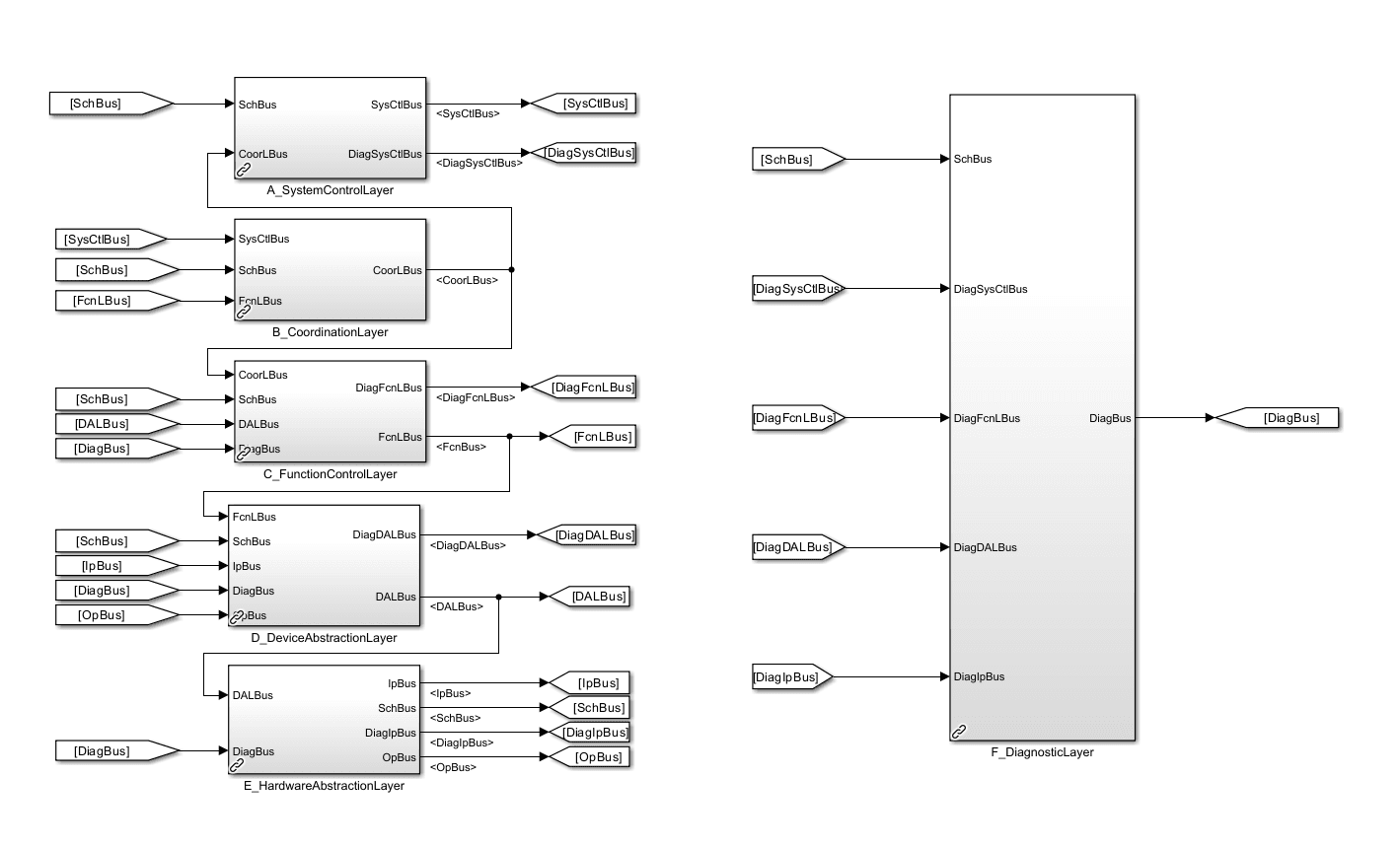
MATIAS is built on a clear and reliable modeling structure that gives development teams a solid foundation for long term, maintainable embedded software. Instead of starting from scratch or dealing with inconsistent project setups, MATIAS provides a predefined architectural backbone that brings clarity and stability to every model.
A clear separation of concerns
MATIAS ensures that hardware‑specific details, device behavior, and application logic remain cleanly separated. This reduces unintended dependencies, keeps models understandable, and makes it easier for engineers to navigate complex systems
Consistent layering for every model
All MATIAS‑based models follow the same architectural principles.
This consistency helps teams:
- Work more efficiently across projects
- Reduce onboarding time for new engineers
- Maintain structure even as systems grow in complexity
A uniform foundation leads to fewer surprises and smoother collaboration.
Predictable behavior & easier debugging
Because MATIAS uses standardized patterns, system behavior becomes more predictable.
Engineers can trace signals, isolate issues, and understand model logic quickly, greatly simplifying debugging and analysis across product variants.
Smooth evolution across product generations
Whether you’re introducing new sensors, updating microcontrollers, or evolving the control system, MATIAS keeps your architecture stable. Its predefined patterns enable clean integration of new components without heavy refactoring.
Built in signal routing & ready made patterns
With routing structures and architectural patterns already in place, teams can integrate new hardware and software modules with minimal effort. This prevents technical debt and keeps development focused on functional innovation rather than foundational rework.

VDL Enabling Transport Solutions
Automotive Campus 59 5708 JZ Helmond The Netherlands